A. Data collection
Ten proprioceptive states are paired with one measured force value.
Anonymous Institution
FEEL (Finger External-Force Estimation from Proprioceptive SignaLs) estimates per-finger external force from proprioceptive signals without external force sensors during deployment. The estimates guide finger-command adaptation during manipulation.
01
Reliable box manipulation requires successful placement without damage, which depends on maintaining sufficient contact force without excessive loading. We hypothesize that per-finger force feedback improves manipulation reliability relative to open-loop finger commands. To this end, we present Finger External-Force Estimation from Proprioceptive SignaLs (FEEL), an uncertainty-aware residual method that estimates per-finger external force magnitude from proprioceptive histories. Our method combines a calibrated virtual-spring estimate with a residual distribution predicted by a Mixture Density Network (MDN) and requires no dedicated contact sensors during deployment. The estimated force is used for continuous per-finger adaptation, while predictive uncertainty is evaluated as an empirical signal of ambiguity in proprioceptive force estimation. Across ten fingers and contact forces spanning 0–20 N, our method achieves a mean RMSE of 0.251 N, reducing the error by 92.8% relative to the virtual spring and by 9.4% relative to an end-to-end MDN. In box pick-and-place, force adaptation maintains task success at 10/10 and increases both damage-free outcomes and reliability from 7/10 to 10/10. A video demonstrating the proposed method is available at https://anonymous-webpage.pages.dev/.
02
Synchronized force measurements train a residual model for per-finger force estimation and adaptation.
Ten proprioceptive states are paired with one measured force value.
The MDN learns GT force − virtual-spring force. During inference, the spring force and learned residual are added.

Estimated per-finger force is shown alongside the F/T sensor measurement.
04
Estimated force adapts each finger command to support successful, damage-free box placement.
Joint state Command
Close fingers
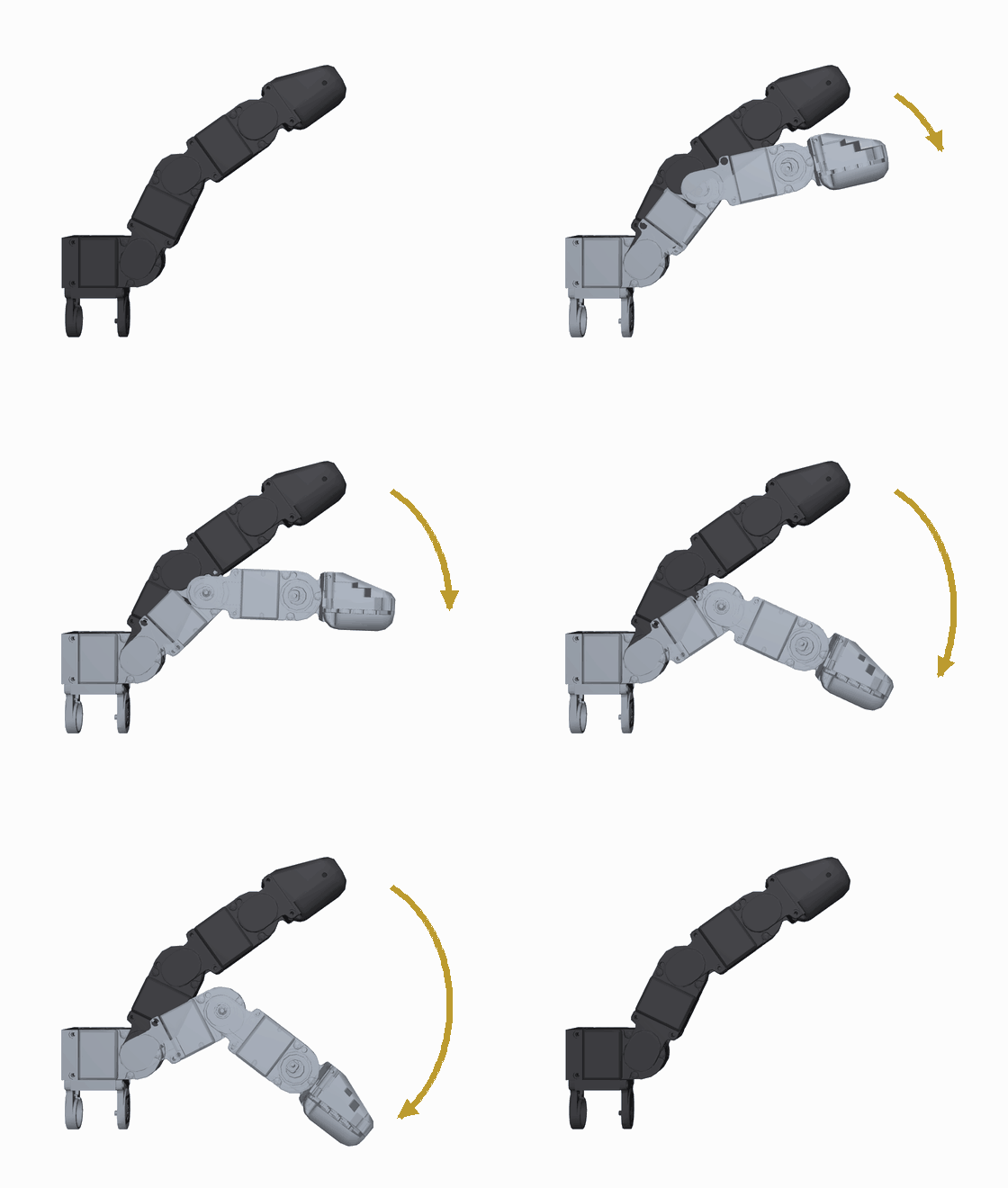
Hold
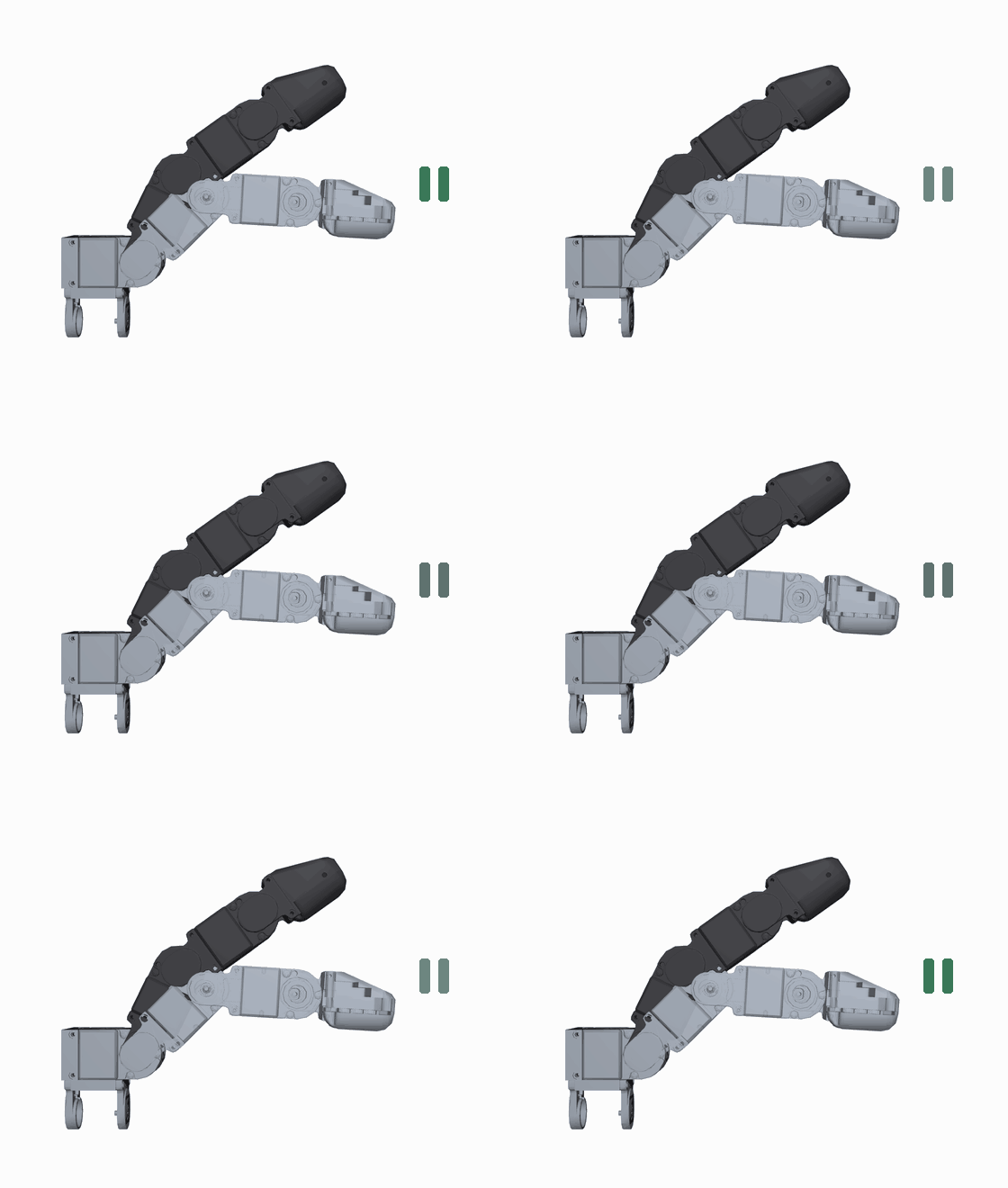
Relax fingers
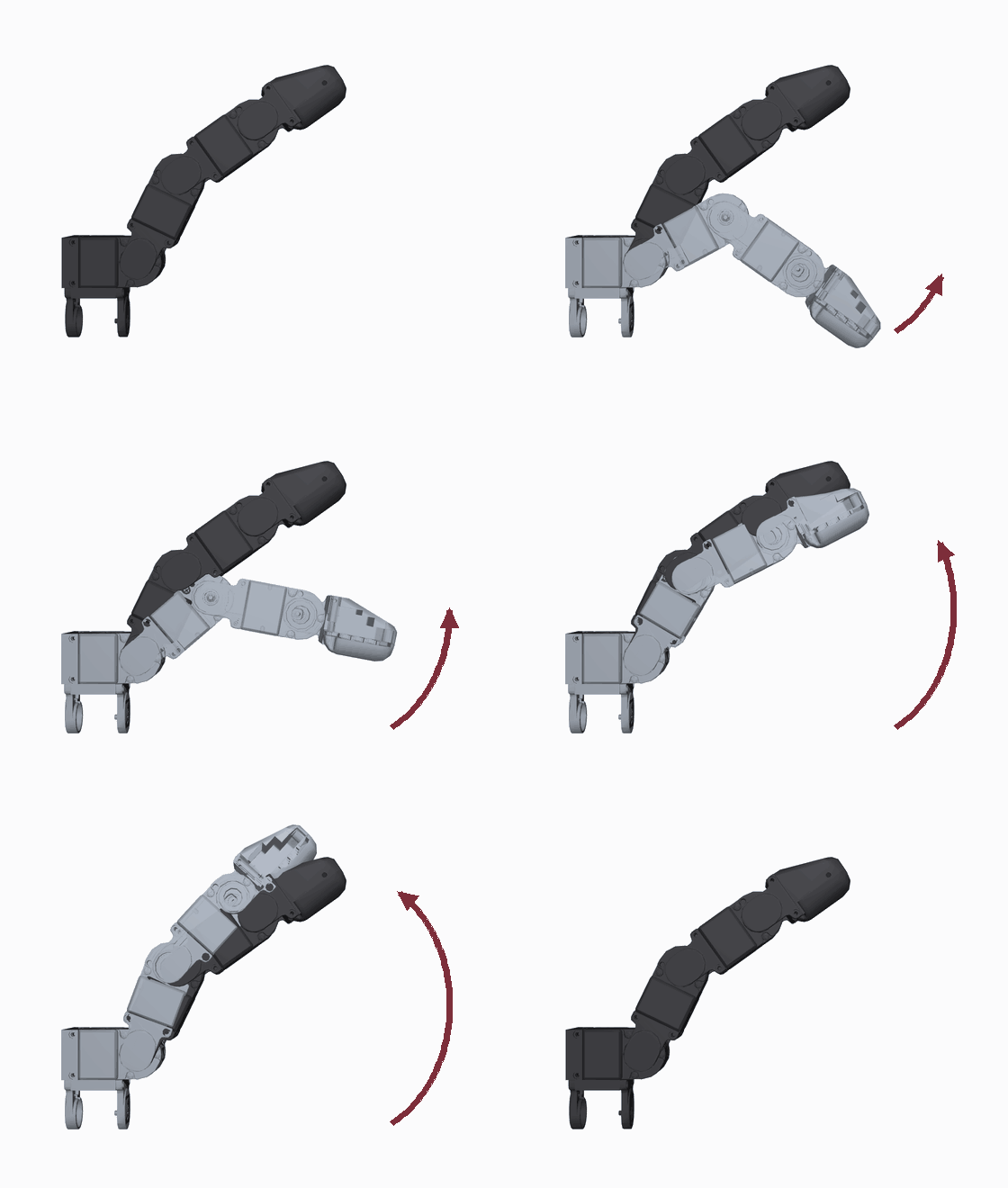
Task success 10/10 · Damage-free 10/10 · Reliable 10/10
Task success 10/10 · Damage-free 7/10 · Reliable 7/10
05
Different contact paths reveal ambiguity in proprioceptive force estimation.